App Design
By

Mad Brains Technologies


Delivery platforms bring in orders, but they take a cut of every sale and keep your customers’ details to themselves. This blog explains how custom restaurant apps let you take orders directly, own your customer data, and reward the regulars who keep you busy. It also covers which features to build first, how to handle delivery without your own drivers, and how to move marketplace customers over to your app.
It's Friday night, and the tablets won't stop beeping. Eighty orders in, the kitchen is flat out, and every order is sending a slice of its value to a delivery platform. You don't get the customer's email either. Next week, that same customer might scroll past you and order from the place two doors down.
Custom restaurant apps solve this with a direct ordering system. You gain more from each transaction, control the customer relationship, and choose how to incentivize regular customers.
What Delivery Platforms Really Cost You

The commission is the obvious part. Marketplace apps commonly charge somewhere around 15% to 30% per order, depending on the plan and the market. On a thin restaurant margin, that adds up fast.
The less obvious costs hurt just as much:
1. You rent your customers
The platform owns the relationship, and you usually get limited data about who's ordering.
2. You're one tile among dozens
Your menu sits next to your competitors, often with a promo banner that isn't yours.
3. Your brand gets diluted
The packaging is yours, but the experience belongs to someone else's app.
What Custom Restaurant Apps Give You Back
An app with your name on it changes who's in control. Orders come straight to you, and the customer's details stay with you too. That means you can see who orders every Thursday and send them something worthwhile.
Good food ordering app development turns that data into repeat business. A few examples:
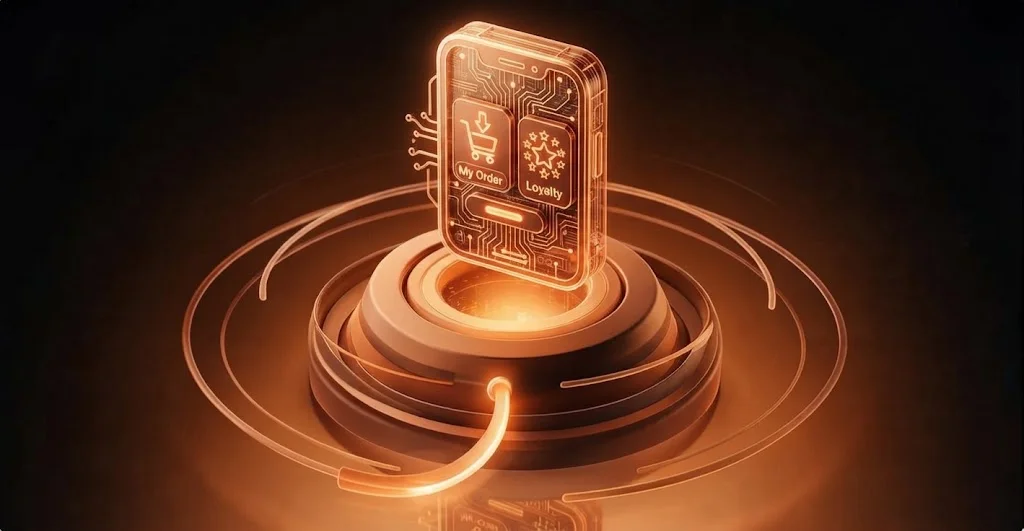
A loyalty card that fills up on its own, no paper stamps to lose
A push notification at 5 pm on a rainy day, when people are deciding what's for dinner
A "reorder last meal" button for the regular who always gets the same thing
None of this is possible when the platform sits between you and your diners.
Features to Build First
You don't need everything on day one. A strong first version of a restaurant app usually covers:
A fast menu with photos and clear modifiers ("no onions", "extra sauce")
Saved payment details and Apple Pay or Google Pay
Pickup and delivery scheduling
Live order status, so nobody has to call and ask
A simple admin panel to update the menu and pause items when they sell out
Delivery is where people get stuck. Running your own drivers is one option, and it's where on demand food delivery app development gets more involved, with driver apps, routing, and live tracking. If you'd rather not hire drivers, services like DoorDash Drive and Uber Direct can handle delivery for orders placed through your own app.
Good restaurant app development keeps that choice open, so you can start with pickup and add delivery later.
Do You Still Need the Big Platforms?
For most restaurants, yes, at least for a while. Marketplaces are good at helping new customers find you. Custom restaurant apps are where you keep them.
A simple way to shift people over is to put a card in every marketplace bag. Something like "Order direct next time and get a free side." Some of those customers will try it, and each one who switches is an order you keep in full.
Conclusion
Every order that comes through your own app is one you keep in full, along with a customer you can reach again. Custom restaurant apps don't need to launch with everything. Start with pickup, a loyalty program, and a reorder button, then grow as more regulars switch over.
If you're weighing up food delivery app development services, talk to our team about what your restaurant needs.
FAQs
Last updated:
Mad Brains Technologies
Enterprise UX & Product Strategy Team
Mad Brains is an enterprise UX and product consultancy focused on reducing product risk and accelerating growth. Through UX audits, conversion-led design, and full-stack development, the team helps organizations build scalable digital platforms that drive measurable business outcomes.